
Guide
Generate Games with Super Intelligence (SI) or Artificial Intelligence (AI)
9 min read
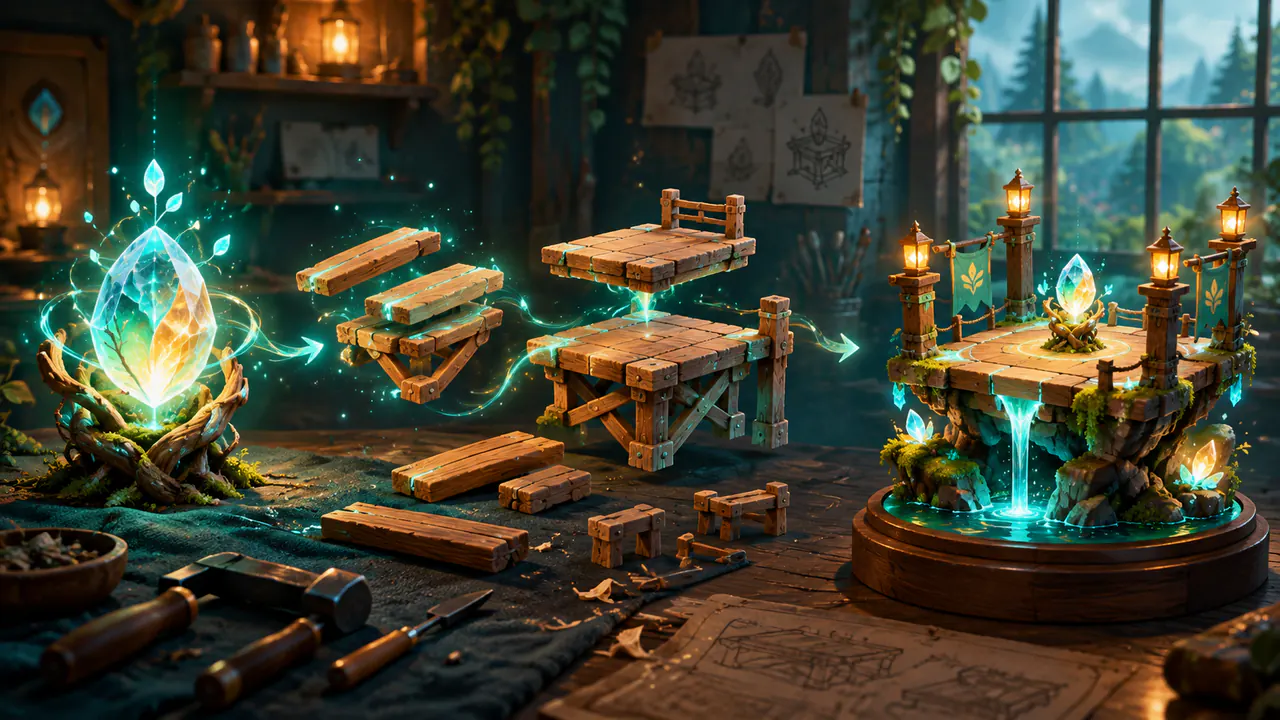
People type “generate games with SI or AI” into a search bar because they want a machine to do the expensive middle of game making: invent systems, fill levels, paint worlds, write quests, and somehow leave something a human can play. Super intelligence (SI) and artificial intelligence (AI) are the two labels on that wish. One is the older umbrella. The other is the louder public rename for advanced AI. Neither label, by itself, produces a playable build. A pipeline does.
This article is that pipeline for Infinite Game readers. It sits beside the guides on games with super intelligence, games with artificial intelligence, and infinite games autogenerated by AI. Those pieces explain vocabulary, in-game AI, and endless content. This one asks a sharper question: how do you generate a game — or keep generating playable minutes — when SI or AI is the workshop partner, and a score chase is still supposed to mean something.
SI and AI are names for the author, not for the sport
Artificial intelligence is the established term for machine systems that propose, classify, plan, or decide. In game production that includes classical generators, behavior systems, and modern models. Super intelligence, abbreviated SI in many product pitches, is increasingly used as a new public name for the stronger end of that stack: models that draft whole design docs, invent mechanics, or iterate on a prototype overnight. Research still reserves “superintelligence” for systems that outclass humans across broad cognitive tasks. Marketing does not wait for that threshold.
When someone says they generate games with SI or AI, translate the sentence before you celebrate. Which files does the system write? Which files does a human freeze? Which outputs are allowed to touch collision, scoring, and failure? A generated mood board is not a generated game. A generated vertical slice that a stranger can finish without reading the prompt history is closer. An endless run whose every stretch can change a public maximum score is the strictest case of all.
Infinite Game keeps the translation public on purpose. The hero is endless chunk grammar today. SI and AI are welcome later as proposers inside gates, not as unaccountable authors of the sport.
What “generate a game” usually means in practice
Teams rarely ask a model for a finished commercial SKU in one shot. They ask for layers.
Rules drafts: movement feel, win and fail conditions, economy loops, enemy verbs. Level graphs: rooms, biomes, encounter budgets, pacing curves. Presentation: concept art, tilesets, music beds, UI sketches without final lettering. Narrative: quest beats, companion lines, item descriptions. Code scaffolds: boilerplate scenes, data tables, test harnesses. QA help: softlock detection, balance reports, screenshot triage.
Each layer can be SI-flavored or AI-flavored in the marketing sense. Each layer still needs a handoff rule. If the model writes a jump height that the physics code ignores, the generation lied. If the model paints a ledge that the collision mesh does not include, the generation lied. Generating games is the craft of preventing those lies from reaching players while still letting the machine accelerate the middle work.
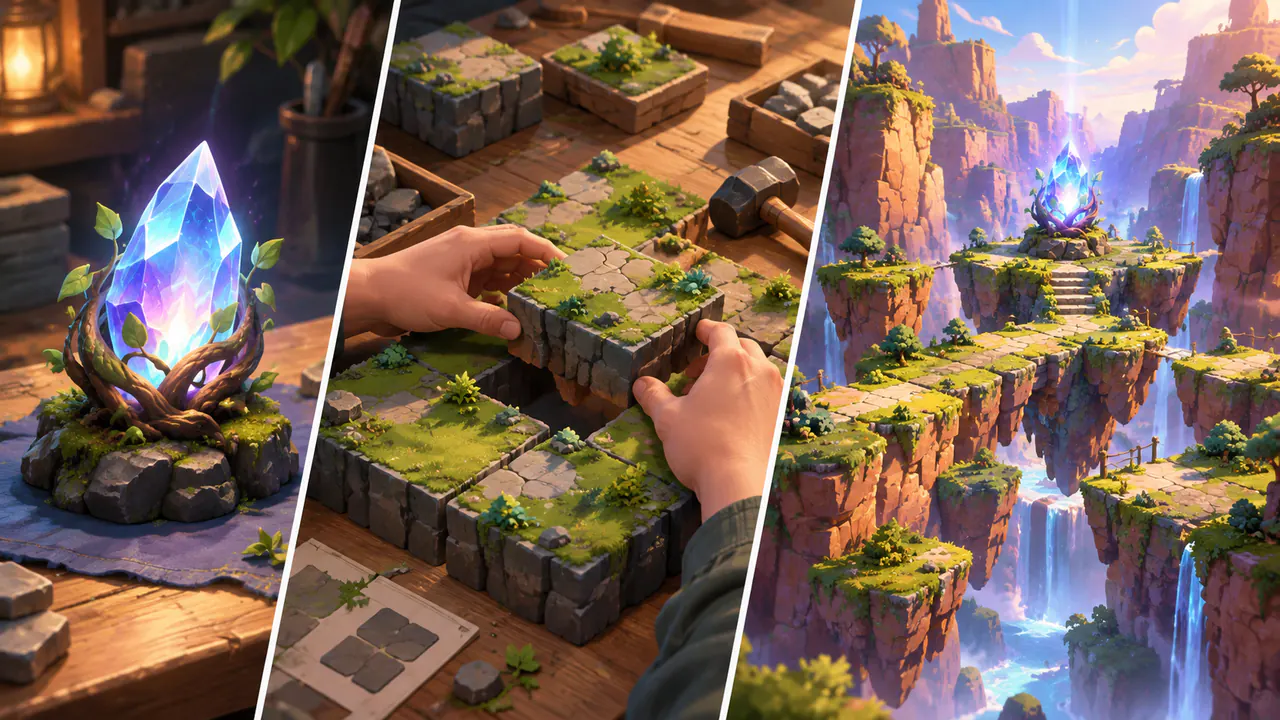
The workshop picture is the mental model. Seed, assembly, playable stage. SI or AI may sit at any station. Only the finished stage is allowed to change a score.
Start from a contract, then ask SI or AI to fill it
The fastest way to get an unplayable “generated game” is to start from a vibe prompt: “make a fun endless platformer with soul.” The machine will produce confident prose and pretty frames. It will not produce a shared sport unless you supply the sport first.
Write the contract in plain language a checker can enforce. How does the character move? What ends a run? What does the number measure? What hazards exist, and how are they telegraphed? What must never change mid-run? Then ask SI or AI to propose content inside that contract: sequences of known hazards, new skins for known tiles, optional flavor text that cannot invent buttons.
This is the same gate described for AI-authored endless stretches, widened to whole-game generation. Campaigns can hide a rough room behind a door. Score chases cannot. If you are generating toward Infinite Game’s shape — no last level, rising distance, readable deaths — the contract is not optional paperwork. It is the game.
A generation loop that ships
Treat generation as a loop with five stations.
Brief. Humans state the genre, platform, audience, and non-negotiables. SI or AI may help expand the brief, but it may not delete the non-negotiables.
Propose. Models draft mechanics, layouts, art, or code. Prefer many small proposals over one giant opaque dump. Small proposals are easier to reject.
Constrain. A grammar, schema, or solver snaps proposals into legal shapes: jump distances, spawn budgets, tile adjacency, dialogue length, disallowed content.
Verify. Automated playthroughs, reachability checks, human playtests, and originality filters reject bad output. Rejected work never reaches a player-facing build.
Assemble. Approved pieces enter a versioned package with a seed or content hash when comparison matters. The build that players touch is this package, not the raw model transcript.
Teams that skip verify invent demos. Teams that skip constrain invent beautiful softlocks. Teams that skip the brief invent five games at once and finish none.
Whole games versus endless minutes
Generating a short game jam entry and generating an endless score engine are related skills with different failure modes.
A short game can be a curated museum: ten rooms, one boss, credits. SI or AI can draft most of the museum if humans curate the exit. An endless game is a factory: it must keep emitting legal minutes. The factory needs stricter tooling because volume amplifies every bug. The article on whether an infinite game exists explains why infinity is a design stance, not a file size. Generation with SI or AI does not create infinity by itself. A loop that asks for another approved stretch creates infinity. The model only fills the request.
If your search intent is “generate endless games with AI,” read the dedicated pipeline article as well. If your intent is “generate any game with SI or AI,” stay here: the stations are shared, and the endless case is the stress test.
SI versus AI in the prompt and in the pitch
Should your tooling docs say SI or AI? For engineering, say AI and then name the subsystem: layout model, image model, planner, classical grammar. For public pages that chase the newer phrase, you can say super intelligence (SI) as long as the page also translates it. Infinite Game’s SI vocabulary article exists for that translation. Do not let the stronger acronym become an excuse to loosen the verify station. A louder name does not make unreachable gaps fair.
Players searching either acronym deserve the same honesty. The system proposed. Something checked. A human owned the ship decision. That sentence beats any branding contest between SI and AI.
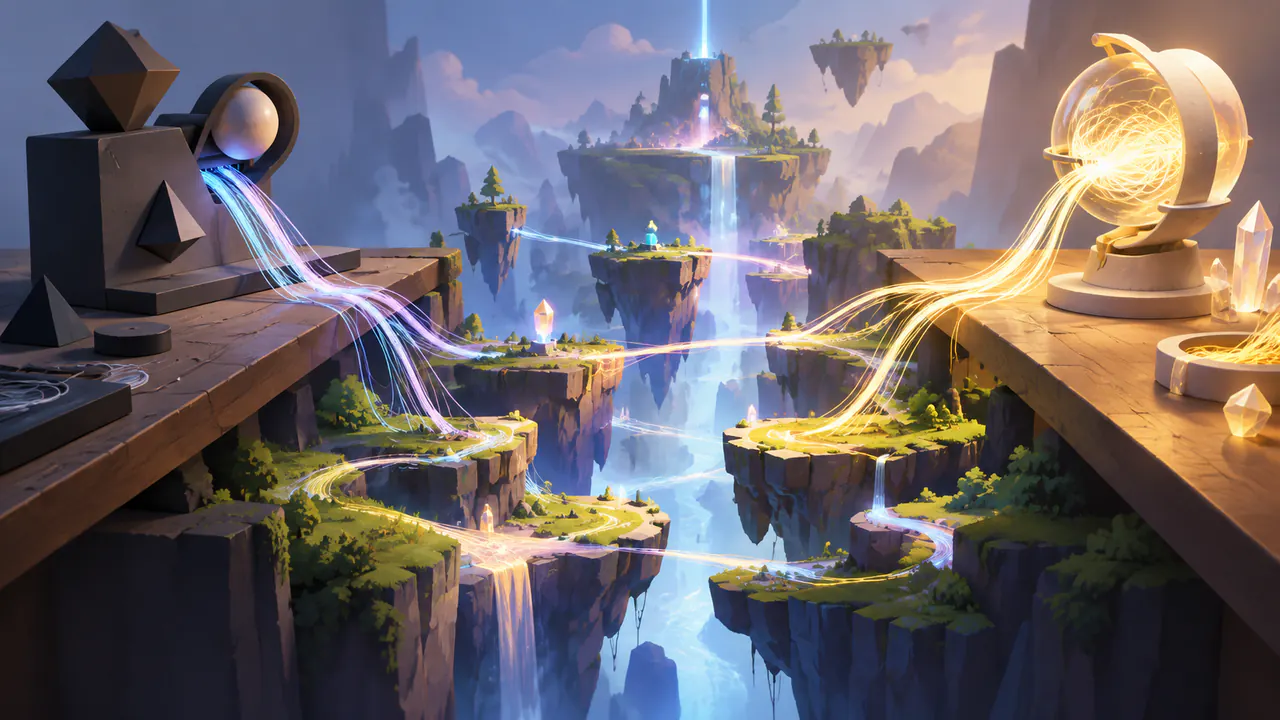
The tools differ in aura. The canyon they feed must obey one physics. That is the whole essay in one frame.
Cost, latency, and where generation should run
Generating at authoring time is usually wiser than generating every frame at play time. Prebuild catalogs of chunks, creatures, and paintings. Sample them with a seed during play. Keep the player’s machine responsive. Keep the network optional for the scored loop.
Live SI or AI calls can still help outside the score: a practice coach, a photo mode stylizer, a private sandbox. Official runs should fail soft if the model is offline. A missing skybox is acceptable. A missing floor is not.
Cost follows the same split. Regenerating a private universe per session is expensive and hard to moderate. Generating a curated catalog once, then remixing it under a grammar, is how endless games stay generous without burning the workshop budget on every jump.
Originality, safety, and credit
Any system that has seen many games will suggest many games. Ask for genre fluency, not for a specific mascot. Filter player-facing text for contradictions with the real controls. Filter images for readable logos and known characters. Keep provenance: which prompt, which model version, which human approval, which content hash entered the build.
Credit should be readable. “Generated with AI” is incomplete. “Levels proposed by a model, collision approved by a checker, art directed by a person” is a sentence players can trust. SI marketing that hides the human and the checker is asking for a backlash the first time a generated stretch feels cursed.
How difficulty fits a generated game
Generation can raise difficulty by accident: denser hazards, shorter telegraphs, stacked new ideas. That is not the same as designing the hardest game in history. Hardness needs rulers. When SI or AI proposes a stretch, the verify station should measure warning frames, gap widths, and recovery pockets against a budget. If the budget is exceeded, reject. Do not ship the stretch because the prompt said “epic.”
Endless generation makes this mandatory. A campaign boss can be tuned by hand for months. An infinite factory will invent a new boss every minute unless the budget is code.
What Infinite Game will generate — and how
Today the live run does not call SI or AI to invent the next gap. People authored the chunk grammar. The course extends. The score is distance. That is already a generated endless game in the classical sense.
When model proposals enter, they should enter through the stations in this article and the gates in the AI-infinite guide. Infinite Game will keep saying artificial intelligence for the tools and will acknowledge super intelligence (SI) as the public rename when searchers arrive on that phrase. It will not claim that a renamed model removes the need for a contract.
A checklist before you say the game was generated by SI or AI
The non-negotiable verbs and score formula are written down. Proposals are constrained by a grammar or schema. A verify step can reject unplayable or contradictory output. Rejected output never reaches players. Seeds or hashes make decisive content replayable when records matter. Play-time generation fails soft. Art cannot redefine collision. Text cannot invent controls. Originality and safety filters run before ship. Credits name models, checkers, and humans without mythology. Difficulty uses numeric budgets. The player can explain a death after one viewing.
If every line is true, you generated a game with SI or AI in the only sense that matters: a machine accelerated authorship inside a sport people can learn. If any line is false, you generated a demo of a prompt. Demos can be beautiful. They do not get to hold the maximum score on Infinite Game until the workshop can replace a stretch without lying about either the authorship or the infinity.