Blog
The Rise of AI Is Making a New Industry of Game Vibe Coders
8 min read
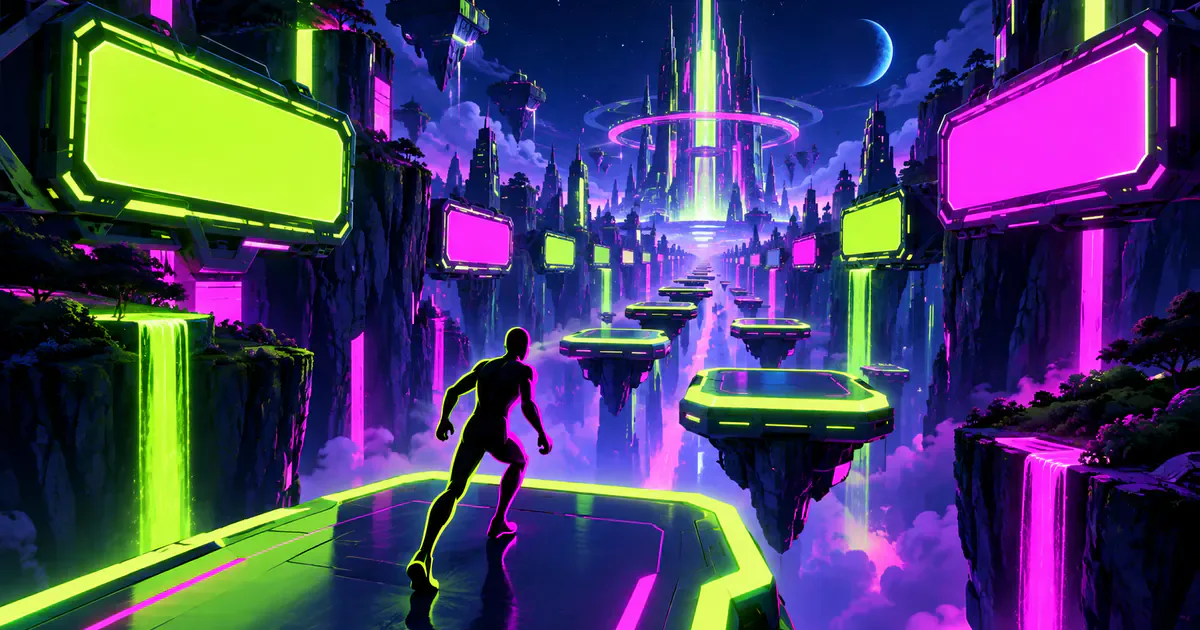
AI did not invent the urge to make games. It changed the cost of starting. A playable loop that used to need a small team, a toolchain, and weeks of scaffolding can now begin as a conversation, a reference clip, and a stubborn afternoon. That shift is creating a new industry layer: game vibe coders.
A game vibe coder is not a studio replacement and not a meme job title only. It is a working style. You hold a clear play fantasy, ask models and copilots to draft the scaffolding, keep what feels right, throw out what breaks the sport, and ship something a stranger can open in a browser. The product is not a slide deck. The product is a run.
Why “vibe coding” landed on games first
Games reward fast feedback. You press a key, the character moves, you die, you try again. That loop is perfect for AI-assisted building because you can feel a bad draft in seconds. If a generated platform gap is unfair, you see it. If a control scheme is mushy, you feel it. The medium tells you the truth faster than a dashboard does.
Browser games and endless score runs fit especially well. Scope can stay small. Distribution is a URL. The finish line can be a high score instead of a twenty-hour campaign. Infinite Game’s own directory of infinite games is built around that idea: playable online titles first, long guides second.
Vibe coding thrives where the contract is short and testable. “Survive farther.” “Switch faces mid-air.” “Beat yesterday’s number.” Those sentences are easier to keep honest than “deliver a living open world with seasonal narrative arcs.”
What the new industry actually sells
The rising industry is not only finished games. It is a stack of roles and products around rapid playable output:
- Promptable starters: templates, engines wrappers, and component kits tuned for copilots.
- Taste operators: people who can reject fluent nonsense and keep a readable player contract.
- Loop polishers: designers who turn a clever prototype into a score chase people reopen.
- Distribution surfaces: directories, embeds, and small publishers that collect browser games.
- Teaching layers: posts, streams, and checklists that show how to keep AI drafts fair.
That is why the phrase “game vibe coders” matters. It names the human job in the middle. Models draft. Markets still need someone who decides what the score means.
The skills that still decide who ships
AI makes first drafts cheaper. It does not make judgment optional.
Taste. A vibe coder has to feel when a jump height, camera, or hazard density is wrong even if the code compiles. Players forgive rough art longer than they forgive unfair deaths.
Constraints. Infinite length without a grammar becomes noise. The same is true for AI content. Fixed verbs, clear failure, and a score formula are the rails. Generation belongs inside those rails.
Translation. A prompt that says “make it fun” is weak. A prompt that says “endless platformer, two movement faces, gray blocks exist in only one face, score is distance” gives the machine a sport to serve.
Verification. If a model proposes a gap, measure it. If it proposes a rule, restate it after one death. Infinite Game’s guides on games with artificial intelligence and generating games with SI or AI keep returning to that gate for a reason.
How studios and solo makers split the map
Large studios will keep owning long campaigns, live services, and systems that need dozens of specialists. Vibe coding does not erase that work. It changes the edges: prototypes arrive earlier, vertical slices get cheaper, and small experiments can be public before a pitch deck hardens.
Solo makers and tiny teams get a different prize. They can publish niche endless games, tool toys, and score chases without waiting for a publisher’s green light. Some of those titles will be disposable. Some will become scenes. The industry forms in the middle: people who repeatedly turn AI-assisted drafts into games strangers actually play.
Risks that will sort amateurs from operators
Fluent junk is the default failure mode. A model can invent rules mid-run, draw collision that does not match the picture, or invent difficulty spikes that feel dramatic and play cruel. A vibe coder who ships that is not building an industry. They are generating demos that burn trust.
Copy risk is real too. Training data can push projects toward familiar mascots, layouts, and interface patterns. Serious makers need refusal lists: no stolen characters, no fake infinity claims, no score that lies.
Another risk is confusing velocity with value. Shipping ten unplayable experiments is not the same as shipping one endless game with a clean high-score contract. The new industry will reward people who reopen their own game the next day because the loop still calls them back.
What Infinite Game is watching
Infinite Game is built for playable online endless games and for public design notes. That combination is deliberate. If AI helps more people make games, the public still needs a place to play them and a place to read how fairness, infinity, and score meaning are supposed to work.
The rise of AI is not replacing game makers with a button. It is creating room for a new craft identity: game vibe coders who treat prompts as workshop partners, keep the player contract fixed, and measure success by whether a stranger can open a tab and chase a higher score tonight.